ABOUT ASTRID TRÜGG
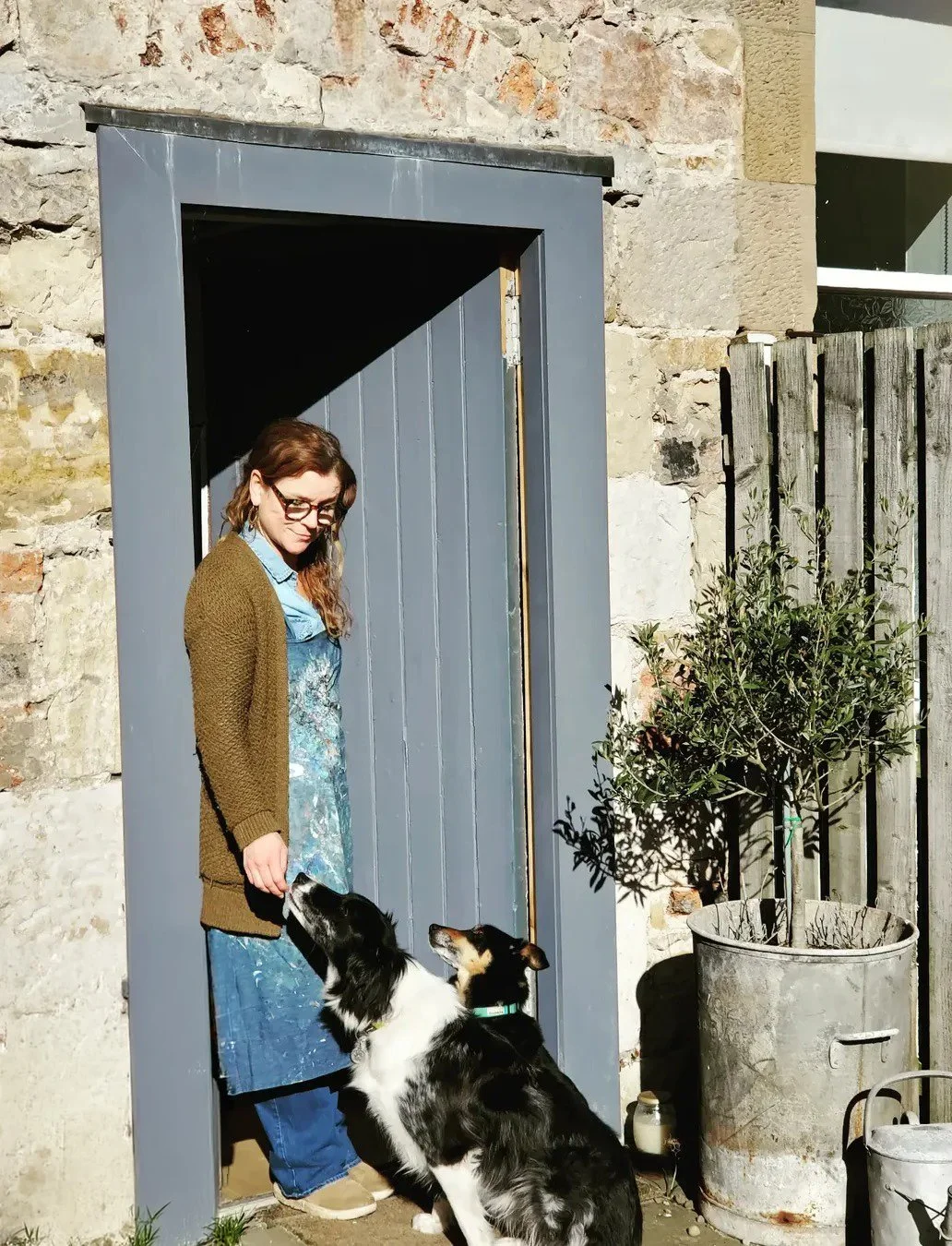
I am Astrid Trügg, a Dutch artist based in North Berwick, East Lothian, Scotland. I paint mostly still lifes, with the occasional coastal scene when the tide is going out at West Bay, or a mediteranian scene.
I grew up in the Netherlands and studied painting at the Utrecht School of Art, graduating in 1991. Scotland called me north in 2003, when I moved to Edinburgh to take a postgraduate course in painting at Leith School of Art. I now live a little further along the coast, in North Berwick.
Fish, lobsters and shellfish often make their way into my paintings, along with the everyday things I keep coming back to: a wooden pepper mill, a tin of sea salt with a sailing boat on it, a jug full of my latest seasonal gatherings. And now and then, a stretch of beach as the tide goes out at West Bay. I like painting the seasons as they shift and settle.
The work is built slowly in thin layers. I use gesso, dry pure pigments, antique newsprint collaged in here and there, and a final wash of beeswax over the surface. Most of the pigments come from Verfmolen De Kat in Zaandam, an old windmill in the Netherlands where the colours are still ground the traditional way. You can read more about the process on the studio page.
Most days you’ll find me in the studio. I work from home and from a studio at Coburg House Art Studios in Leith, Edinburgh. Tess, the studio dog, is good company. It’s often the small things that bring the most joy.
My work goes out regularly to galleries in Edinburgh and further afield. You can see where paintings are showing on the exhibitions & galleries page.
If you would like a painting made for you, with something specific in mind, please get in touch. There’s more about commissions on the commissions page.
-
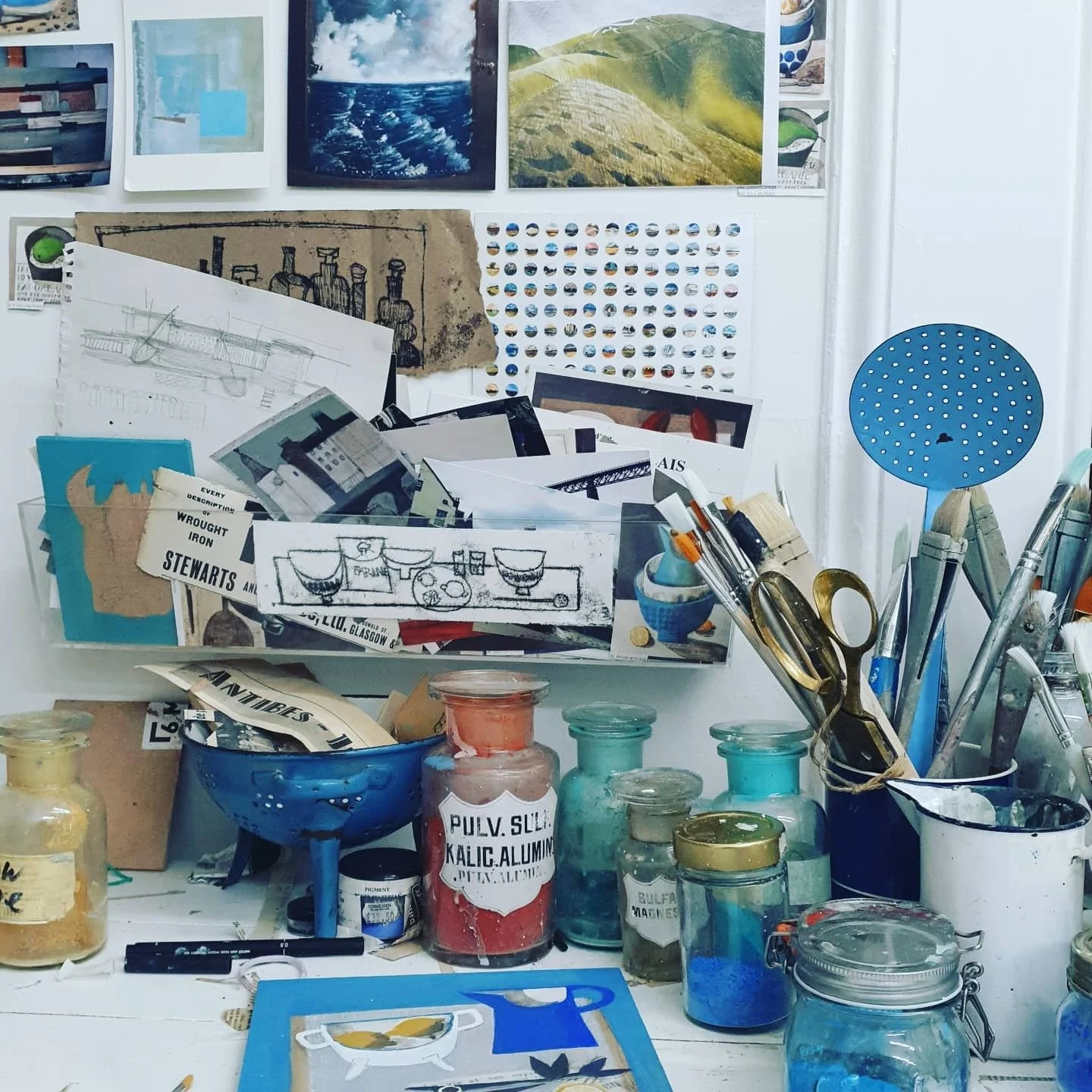
MATERIALS
Every painting is made on panel. Gesso first, then dry pure pigments, with antique newspapers collaged in here and there, and a final wash of beeswax over everything. For the coastal scenes there is graphite in the mix too. It is a slow way of working, and a quiet one, but it gives the paintings their colour and their texture, the things you notice when you stand close.
-
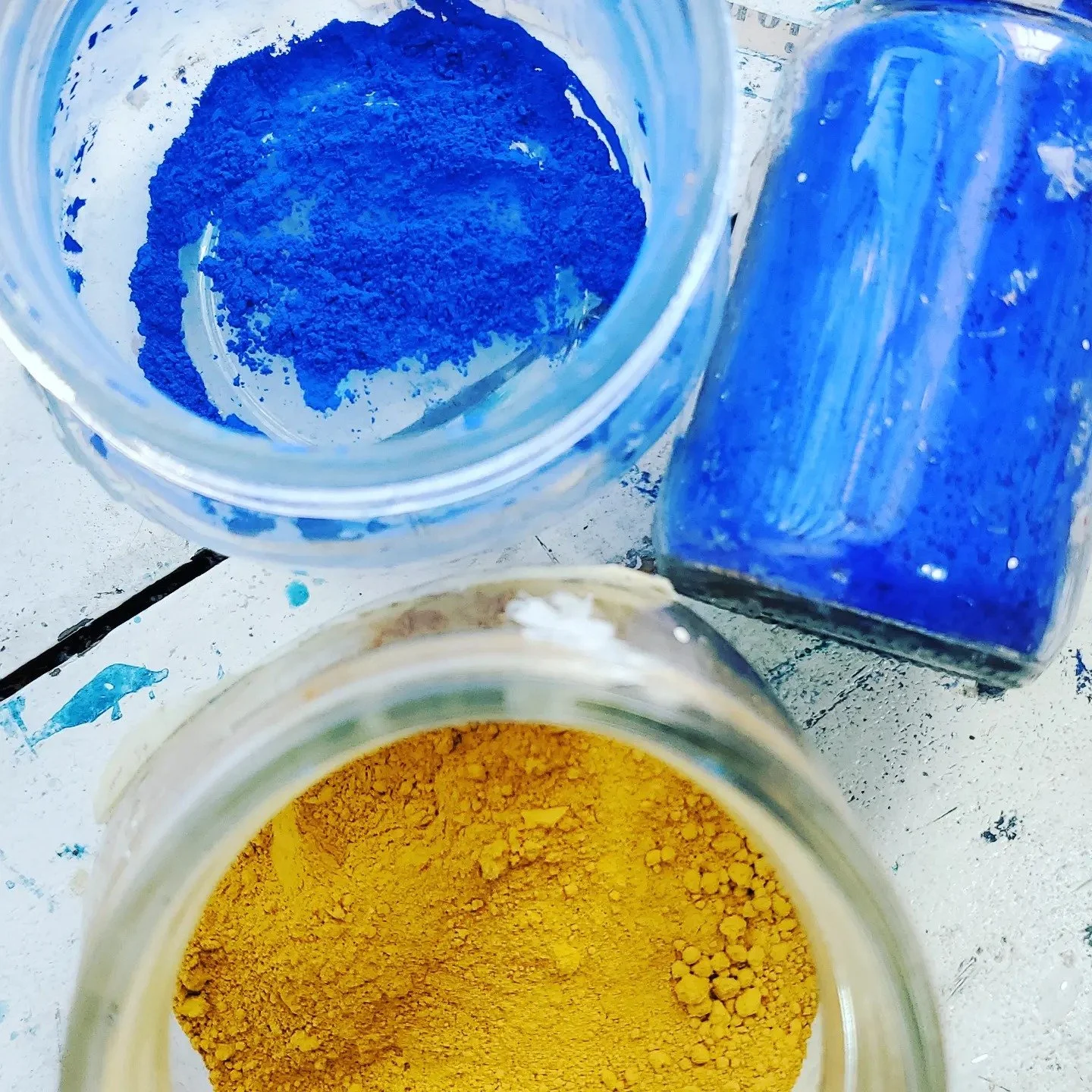
THE PIGMENTS
Most of the pigments come from Verfmolen De Kat, a beautiful old traditional windmill in Zaandam, in the Netherlands, ground the way they always have been. I mix the paint by hand to create each colour. When a new bag arrives I am as happy as a child in a sweet shop.
-
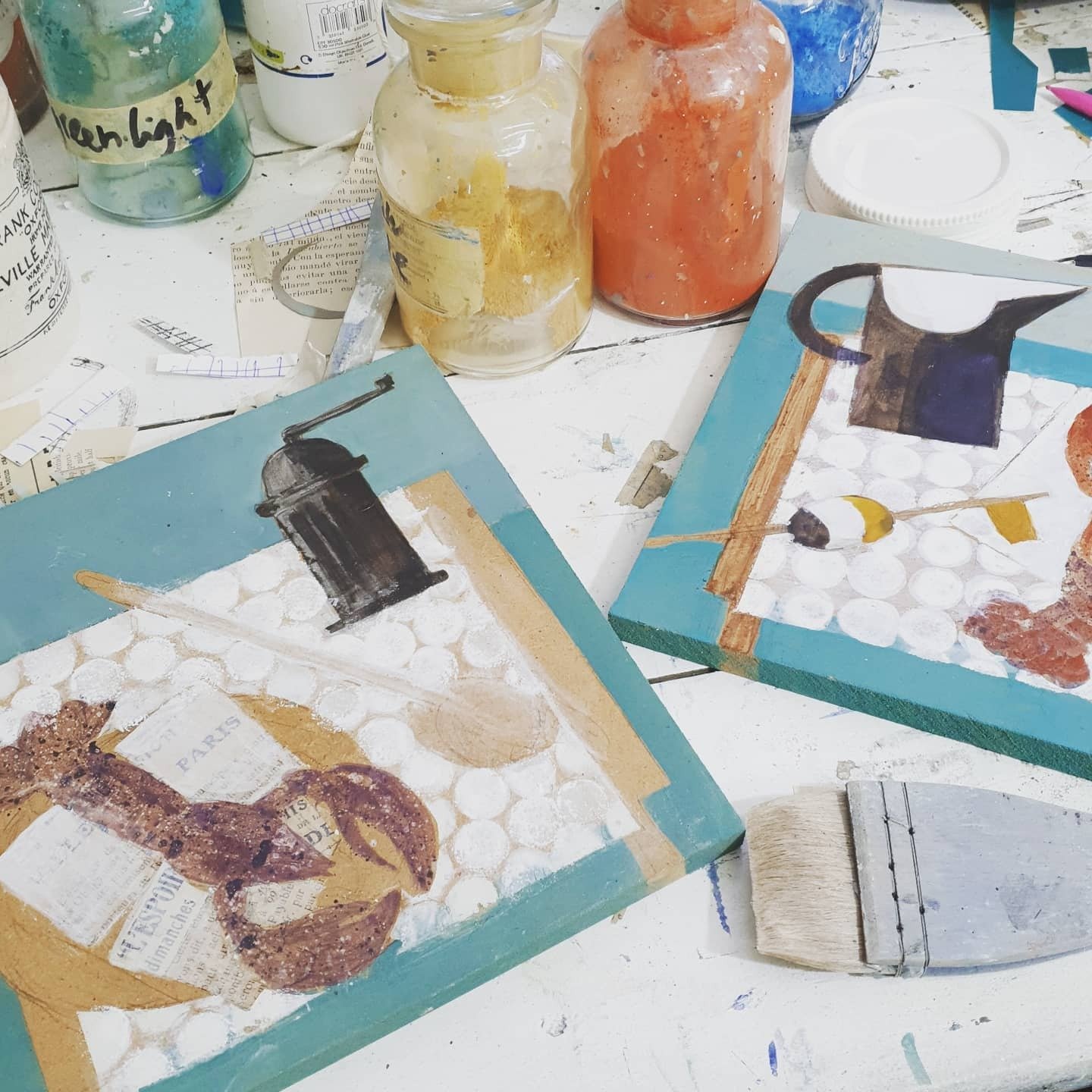
THE PROCESS
A painting comes together in thin layers, one over another. The collage is part of it from early on: antique newspaper and newsprint worked into the surface. I love using old newspapers in this process and choose the pages that fit the feel of the painting. One piece was created with an antique newspaper from 1871! Then I create the painting with pigments, layer by layer, and at the end a wash of beeswax over the whole panel to settle it all together.